
A common misconception is that a secure Web3 wallet can simply “stop MEV.” It cannot, at least not by itself. Maximal Extractable Value, or MEV, is created by the way transactions are observed, ordered, bundled, and executed around public blockchains. A wallet sits at the beginning of that process, where it can improve the user’s information and sometimes influence how a transaction is submitted. It does not control validators, block builders, decentralized exchanges, or the liquidity conditions that determine execution.
That distinction matters for DeFi users in the United States, where a familiar trade may involve several smart contracts, multiple token approvals, a volatile market, and a transaction route selected by a dApp. The practical question is therefore not whether a wallet offers absolute MEV immunity. The better question is: which risks can the wallet identify before signing, which can it reduce through transaction delivery, and which remain properties of the market itself?
MEV began as an ordering problem, not a wallet problem
On a public blockchain, a pending transaction may be visible before it is included in a block. Other participants can inspect its intended action, estimate its likely price impact, and compete to place transactions before, after, or around it. The resulting value may come from arbitrage, liquidation, sandwich attacks, or other forms of strategic ordering. The key mechanism is information plus control over sequence.
A sandwich attack illustrates the risk. Suppose a user submits a large swap that will move the price of a token in a liquidity pool. An adversarial trader may buy immediately before the user, allow the user’s trade to move the price, and sell immediately afterward. The user may receive a worse exchange rate even though the wallet displayed a plausible quote when the transaction was prepared. The loss is not necessarily caused by a malicious dApp. It can emerge from the interaction between public transaction visibility, pool design, and block-ordering incentives.
Early wallet security discussions focused heavily on private-key protection, phishing, and malicious contract approvals. Those remain foundational. MEV added a different category: an honest user can sign exactly what they intended, interact with a legitimate protocol, and still experience poor execution because the transaction became strategically observable. This is why “the transaction was valid” is not the same as “the transaction was economically safe.”
What a wallet can see before the user signs
Transaction simulation is one of the most useful defenses available at the wallet layer. In simplified terms, a wallet evaluates what would likely happen if a proposed transaction were executed against a relevant blockchain state. The result may reveal token transfers, approvals, received assets, contract calls, gas behavior, or a revert that is not obvious from the dApp’s interface.
This changes the signing decision from “Do I recognize this website?” to “What state change is this transaction attempting to produce?” That is a major conceptual improvement. A familiar dApp can generate a dangerous approval, an unexpected transfer, or a call to a contract that behaves differently from the user’s mental model. Conversely, an unfamiliar interface is not automatically malicious if the wallet can clearly expose the intended calls and outcomes. Simulation does not replace judgment, but it gives judgment better evidence.
For MEV specifically, simulation can help identify high slippage, unexpected price movement, and a mismatch between the user’s requested action and the likely result. If a swap simulation shows that the user receives materially fewer tokens than expected, the user has a reason to pause. A wallet with strong dApp integration can also preserve transaction context across multiple networks and protocols, reducing the risk that a user signs a raw call simply because a website presents it in a confusing way.
There is an important boundary condition: a simulation is a forecast of execution under a particular state, not a guarantee of the future block. Between simulation and inclusion, token prices can move, liquidity can change, another transaction can be ordered first, or a contract can depend on conditions that are difficult to model. A result that looks safe in a simulated environment may become less favorable in a live market. The correct mental model is an aircraft instrument panel, not a force field.
MEV protection has several layers
Users often treat MEV protection as a single feature, but it is better understood as a stack of interventions. The first layer is transaction design: setting sensible slippage limits, avoiding unnecessarily large trades in thin pools, and choosing protocols whose execution logic is understood. The second is pre-signing analysis, including simulation and readable interpretation of contract effects. The third is transaction delivery, such as submitting through an order-flow path that may reduce exposure to the public pending-transaction environment.
Private transaction routing can reduce the chance that a transaction is openly observed and copied before inclusion, but it introduces trade-offs. It may depend on specialized infrastructure, builder participation, network support, or different fee dynamics. Privacy in submission also does not eliminate arbitrage that occurs after the transaction is included, and it cannot repair a bad trade route or an excessively permissive slippage setting. Protection against one observation channel is not protection against every form of value extraction.
Some defenses also move risk rather than remove it. A tighter slippage limit can reduce the damage from a sandwich, but it may increase the probability that the transaction fails during normal volatility. A private route may reduce public visibility, but it can make execution behavior less transparent to the user. A wallet that warns about every unusual contract may improve caution while also producing so many alerts that users learn to dismiss them. Effective security is partly a design problem: warnings must be specific enough to change behavior.
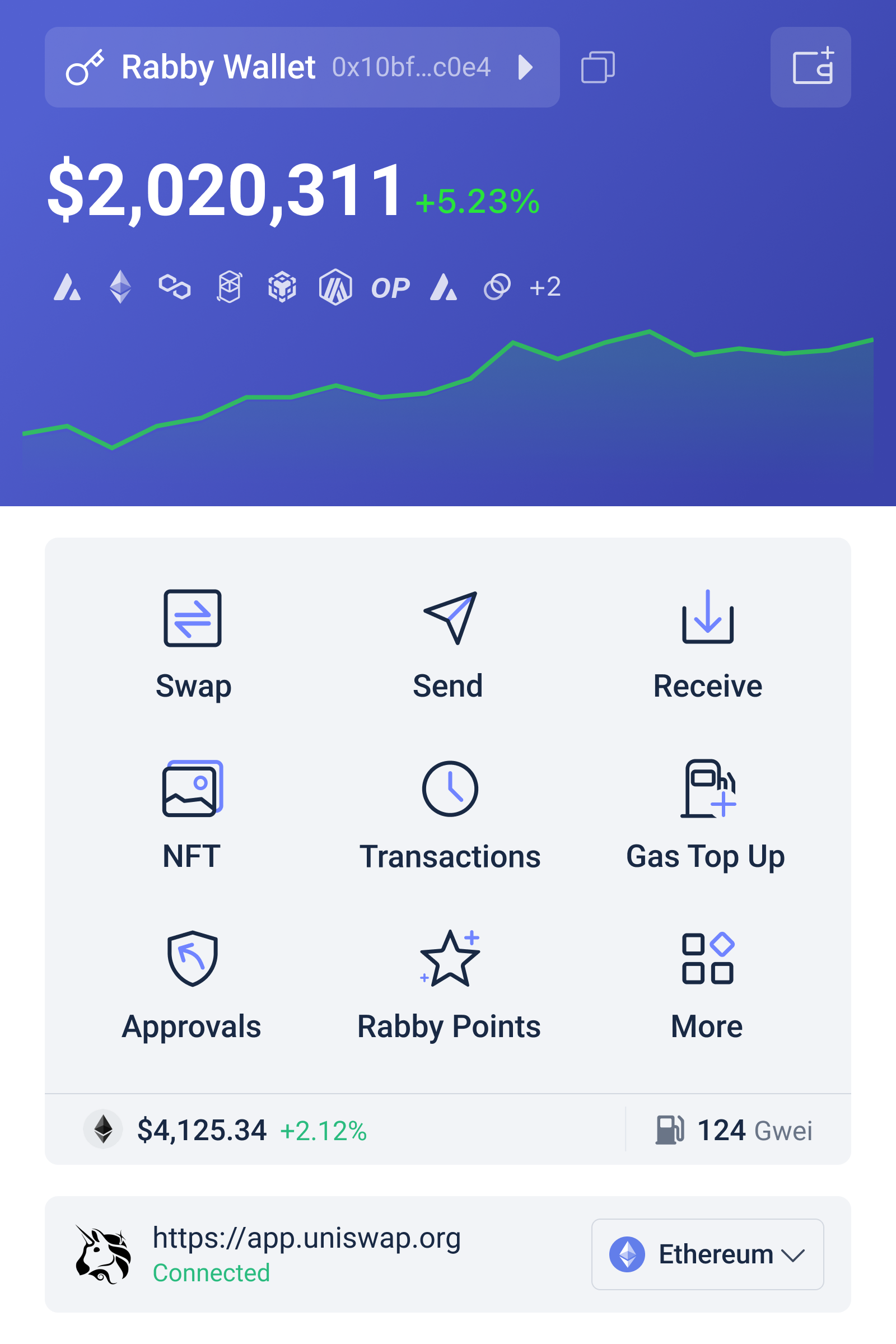
This is where an advanced rabby wallet workflow can be useful for DeFi users: the wallet should act as an interpretation layer between a dApp’s requested call and the user’s signature. The value is not the brand label alone. It is the combination of transaction simulation, readable asset-change analysis, approval awareness, network context, and a clear point at which the user can reject an action before an irreversible state change occurs.
DApp integration is powerful, but it expands the trust surface
Wallet-to-dApp integration makes DeFi usable. A user can connect an account, select a network, request a quote, and sign a transaction without manually assembling contract data. Yet integration also creates a larger trust surface. The dApp chooses what to request; the wallet interprets that request; simulation services estimate the result; the blockchain ultimately applies the transaction. Errors can occur at any layer.
A useful distinction is between interface trust and execution trust. A polished interface may accurately describe a trade, but the signed payload is what matters. A wallet should therefore expose contract addresses, method effects, token movements, and approvals in a form the user can compare with the intended action. Users should be particularly cautious when a “swap” requests an unlimited token approval, when a transaction involves an unfamiliar spender, or when the simulated result contains assets or permissions they did not expect.
Simulation itself can be incomplete. Some protocols use dynamic pricing, external callbacks, time-dependent logic, oracle data, or state that changes rapidly. A simulation may also fail to capture the exact ordering environment in which a transaction will be included. These limitations do not make simulation pointless; they define how it should be used. A clean simulation supports a decision, but it should not override an implausible price, an unfamiliar approval, or a market with inadequate liquidity.
A practical framework for US DeFi users
Before signing a consequential transaction, ask four questions. First, what assets and permissions will leave the wallet, and what will return? Second, which contract or spender receives authority, and is that authority broader than necessary? Third, what happens if the market moves before inclusion—does the transaction fail safely, or can it execute at a materially worse rate? Fourth, how is the transaction being delivered, and does that method reduce public exposure without creating an unacceptable dependency?
The fourth question is often neglected because users focus on gas fees. Yet the cheapest transaction is not necessarily the lowest-cost transaction. Economic cost includes slippage, failed execution, unwanted approvals, and information leakage. For a small, liquid trade, sophisticated routing may add little practical benefit. For a large swap in a shallow pool, the same protections may be economically significant. Risk controls should be proportional to trade size, liquidity, volatility, and contract complexity.
A further improvement is to separate routine actions from high-consequence actions. A familiar claim or transfer can require a quick review. A leveraged position, bridge transaction, liquidity deposit, or unlimited approval deserves a slower inspection of simulated changes and contract permissions. This is not merely operational caution. It recognizes that irreversible transactions should receive more scrutiny than reversible browsing decisions.
What to watch next
MEV protection is likely to develop through coordination among wallets, dApps, exchanges, block builders, and users rather than through one universal wallet feature. If more applications provide accurate intent descriptions and more wallets expose execution consequences before signing, users may make fewer blind approvals. If transaction delivery becomes more private or intent-based, some public-mempool strategies may become less effective, while new forms of competition may emerge elsewhere in the execution pipeline.
The evidence for any particular design remains context-dependent. A protection method that works well on one network or protocol may be unavailable or less reliable on another. Future improvements should therefore be judged by measurable user outcomes: fewer harmful approvals, lower unexpected slippage, clearer failed-transaction behavior, and better alignment between what the dApp says will happen and what the chain records. Features deserve confidence when their mechanism and limits are both visible.
Frequently asked questions
Can a Web3 wallet completely prevent sandwich attacks?
No. A wallet may reduce exposure through simulation, tighter slippage controls, warnings, or private transaction delivery, but it cannot control all block ordering or market conditions. The effectiveness of each measure depends on the network, protocol, liquidity, and submission route.
Does a successful transaction simulation guarantee a safe trade?
No. Simulation estimates the result using a particular state and set of assumptions. Prices, liquidity, ordering, and external data can change before inclusion. Treat the simulation as a pre-signing risk check, not a promise about final execution.
What is the most important wallet feature for MEV-aware users?
There is no single universal feature. The strongest practical combination is understandable transaction simulation, visible asset and approval changes, sensible slippage controls, and an appropriate transaction-delivery method. These tools work best when the user understands what each one can and cannot address.
The central correction is simple: MEV protection is not a switch labeled safe. It is a decision system. A capable wallet can expose hidden consequences, reduce avoidable information leakage, and make dApp requests easier to interrogate. The remaining responsibility is to connect those signals to the market context—trade size, liquidity, volatility, permissions, and timing. That sharper mental model is more durable than any security slogan, because it remains useful even as DeFi infrastructure changes.